Baden SkilCoach Heavy Trainer Rubber Basketball Review (2026)
Reviewing the baden skilcoach heavy trainer rubber basketball: key features, pros and cons, who should buy it, and how it compares to other heavy training balls
 By Emily Parker
Updated November 25, 2026
 By Emily Parker
Updated November 2026
The baden skilcoach heavy trainer rubber basketball is a weighted rubber ball built for players who want to strengthen their handle, grip and shooting mechanics without changing how they practice. It suits youth and high school players, coaches running ball-handling stations, and anyone who wants more feel for the ball during dribbling and passing work. It is a weaker choice for players who need a true match-weight ball for game-accurate shooting, or for those who mainly want a ball for outdoor street play. Read on for the specifications, strengths, limitations and alternatives.
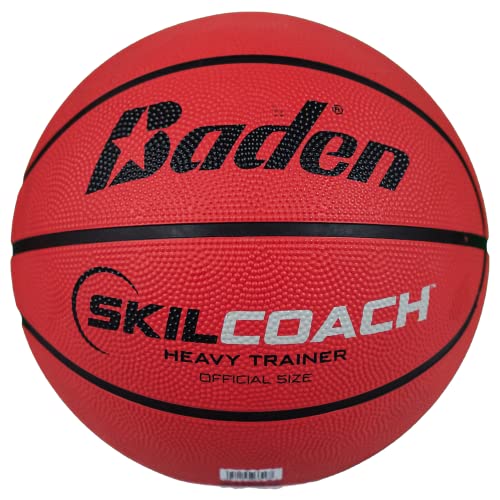
Baden SkilCoach Heavy Trainer Rubber Basketball, Red, 29.5-Inch
Product Overview
This is a 29.5-inch rubber training basketball from Baden, sold in red. The name signals two things: it is a SkilCoach model, which Baden positions as a skill-development ball, and it is a heavy trainer, meaning it weighs more than a standard game ball. The rubber cover is intended to give a firm, controlled bounce and a grippy surface for indoor drills. Its purpose is not to replace a regulation ball in games but to add resistance during repetitions, so the stronger feel carries over when you return to a normal ball.
Key Features & Specifications
| Feature | Details |
|---|---|
| Product type | Heavy trainer rubber basketball |
| Brand | Baden |
| Line | SkilCoach |
| Size | 29.5 inches (circumference, as listed) |
| Color | Red |
| Cover material | Rubber |
| Intended use | Ball-handling, passing and shooting training |
| Weight | Heavier than a standard ball; check the listing for the exact figure |
Pros & Cons
Pros
- Added weight builds hand and wrist strength
- Rubber cover offers reliable grip
- Useful for dribble and pass repetitions
- Durable for indoor training surfaces
- Good fit for skill-focused practice blocks
Cons
- Not a match-accurate game ball
- Feel changes sharply after training
- Less suited to outdoor concrete use
- Limited for full-court shooting accuracy
Performance Analysis
Performance here depends on the purpose you bring to the ball. Based on the listed specifications and common owner feedback patterns, the extra weight is the main training variable. Heavier balls ask the forearm and fingers to work harder on each dribble and pass, which many coaches use to build control. Owners often report that the rubber cover grips well during sweaty indoor sessions, which helps with guarded dribbling drills. The trade-off is that the ball does not behave like a standard leather or composite game ball, so shooting drills should be kept short and paired with regulation balls. Expect the best results from short, frequent sessions rather than long stretches with the trainer alone.
Who Should Buy This Product?
This ball fits players who want structured strength and feel work, such as guards refining a low dribble or post players improving passing grip. Coaches who run station-based practices will also find it useful, since one heavy ball can rotate through several groups. Skip it if you need a single ball for games, or if most of your play happens on rough outdoor courts where a rubber trainer will wear faster. Beginners who are still learning the basic dribble may also do better with a standard ball until their fundamentals are steady.
Buying Guide
When choosing a heavy trainer, start with size and weight. Make sure the circumference matches the level you train for, since a 29.5-inch ball is not the same as a standard size 7 game ball. Check the listed weight against your current strength. Begin with lighter sessions and build up, because overloading the grip can cause fatigue and sloppy form. Look at the cover material as well: rubber suits indoor work, while composite or leather covers may suit other needs. Finally, decide how you will use the ball. Keep a regulation ball for shooting and game-like reps, and use the trainer for focused control drills.
If you want an alternative, the Baden Heavy Trainer Rubber Basketball is a weighted training ball offered in size 7 and 6 for strength and skill work, so it may suit players who need a different size range:

Baden Heavy Trainer Rubber Basketball | Weighted Training Ball for Strength and Skill Development | Size 7 & 6
For shooters who want hand-position feedback rather than added weight, the Baden SkilCoach Shooter’s Basketball is a rubber training ball designed to teach hand placement:
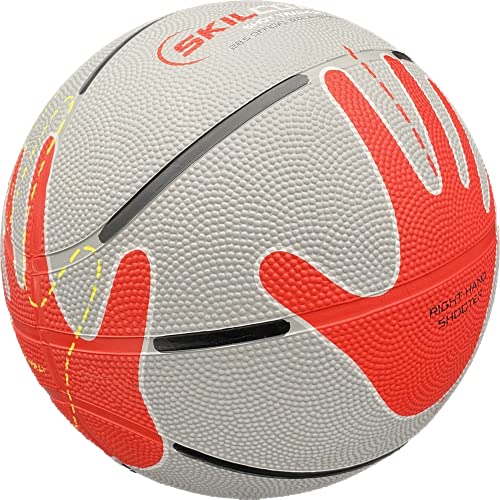
Baden SkilCoach Shooter's Basketball | Rubber Training Basketball | Teaches Hand Postioning | Basektball Training Aid | 28.5-Inch Ball
For more on how heavy balls fit into a training plan, see Baden Heavy Trainer Basketball Drills: 4 Best Options Compared and Small Heavy Ball Basketball: A Practical Guide (2026).
FAQ
Can I use this ball for games?
It is designed as a training ball rather than a match ball. Use it for drills and conditioning, then switch to a regulation ball for scrimmages and shooting practice so your touch stays accurate.
How often should I train with a heavy ball?
Short sessions of ten to fifteen minutes, two or three times a week, are a sensible starting point. Stop if your wrist or forearm feels strained, and increase time gradually over several weeks.
Is the rubber cover suitable for outdoor courts?
Rubber performs best on indoor surfaces. Repeated use on rough concrete can wear the cover faster, so reserve outdoor sessions for a standard ball unless the manufacturer says otherwise.
Will a heavy ball help my shooting?
It can strengthen the hands and wrists, which supports shot control. However, it does not replicate a game ball’s release, so pair it with regulation shooting work to see transfer to real shots.
Who should avoid this product?
Beginners still learning the basic dribble and players who need an accurate match ball should look elsewhere. If you have wrist or hand pain, consult a doctor or athletic trainer before adding weighted work.
Before you buy: helpful guides
Related reading
About Emily Parker
Emily Parker is part of our editorial team and reviews and edits our basketball skills & drills guides, checking product details against manufacturer specifications and owner feedback.
About the author
Emily Parker writes reviews and buying guides for Pressure Basketball.