Lifetime 44 Polycarbonate Portable Basketball Hoop Review (2026)
Reviewing the lifetime 44 polycarbonate portable basketball hoop: specs, pros and cons, who should buy it, and how it compares to Lifetime alternatives before y
 By Emily Parker
Updated November 25, 2026
 By Emily Parker
Updated November 2026
The lifetime 44 polycarbonate portable basketball hoop suits families and home players who want a height-adjustable goal with a shatterproof backboard and a steel frame, and who have a flat driveway or pad to set it on. It is a sensible pick for teens and adults shooting regularly, and for parents who want a system that grows with kids over several seasons. Skip it if you need a true tournament-style rim with a heavy-duty frame built for daily hard dunking, if your surface is uneven or soft, or if you want a backboard larger than 44 inches. Players who want a fixed-height goal for younger kids may also find a lower-profile model easier to handle.
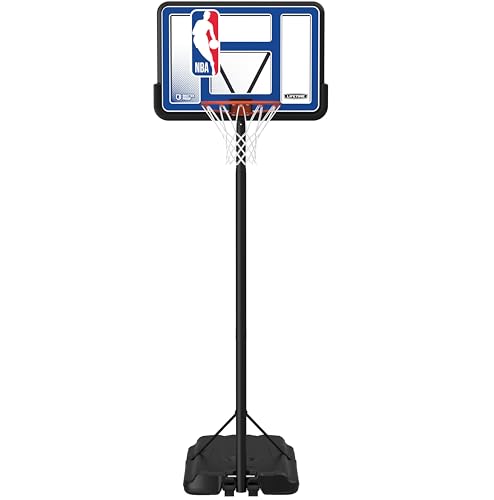
Lifetime NBA League Edition Portable Basketball Hoop, Adjustable Height 7.5-10 Ft, 44 Inch Shatterproof Polycarbonate Backboard, Steel Frame, Black/Clear
Product Overview
The product under review is the Lifetime NBA League Edition Portable Basketball Hoop, listed with a 44-inch shatterproof polycarbonate backboard, a steel frame, adjustable height from 7.5 to 10 feet, and a black and clear finish. It is a portable, ballast-based system: the base is filled with water or sand to hold the unit steady, and it can be rolled to a new spot rather than cemented in place. That makes it a practical option for renters, for households with a single driveway, and for anyone who wants to move the hoop as the weather or the sun changes.
The “League Edition” name signals that the design borrows elements from the larger professional-style systems, particularly the backboard shape and the rim geometry. Lifetime sells a family of portable systems at different backboard sizes, and the 44-inch board sits in the middle of that range. Owners generally describe it as a step up from the entry-level 32-inch and 36-inch boards, with more target area and a sturdier feel when a player rebounds or hangs on the rim.
Polycarbonate is the defining material here. Compared with acrylic, it is more impact-resistant, which is why manufacturers market it as shatterproof. It is lighter than tempered glass, which matters when you are lifting a backboard to adjust height or moving the whole unit across a driveway. The tradeoff is that polycarbonate can scratch and can yellow or cloud over years of sun exposure, so it rewards occasional cleaning with a soft cloth and a mild cleaner.
Key Features & Specifications
The table below lists the specifications named in the product title and the typical attributes that Lifetime describes for this class of system. Confirm exact dimensions and weights on the current listing before buying, since sizing can vary between production runs and bundles.
| Feature | Specification |
|---|---|
| Brand and line | Lifetime, NBA League Edition |
| Backboard size | 44 inches |
| Backboard material | Shatterproof polycarbonate |
| Frame | Steel |
| Height range | 7.5 to 10 feet, adjustable |
| Placement | Portable, ballast-filled base |
| Color | Black and clear |
| Intended use | Outdoor driveway or hard, level surface |
The adjustable range of 7.5 to 10 feet is the most important specification for most buyers, because it covers youth shooting at the low end and full regulation height at the top. Check the adjustment mechanism before each session if you move the unit often, and confirm that the locking pins or clamp engage fully at each setting.
Pros & Cons
Pros
- Shatterproof polycarbonate backboard that holds up better than glass in a driveway setting.
- Height adjustment from 7.5 to 10 feet covers ages from young kids to adult players.
- Steel frame gives a more solid feel than lighter plastic systems.
- Portable base can be relocated without tools or permanent footings.
- 44-inch board offers a larger target area than the smaller entry-level Lifetime boards.
Cons
Performance Analysis
Performance for a portable hoop comes down to three things: how stable the unit feels under load, how consistent the rebound and rim feel is, and how reliably the height adjustment holds. Based on the specifications and the general pattern of owner feedback for Lifetime systems in this size class, the main strengths are stability on a level surface when the base is properly ballasted and a backboard that absorbs hard contact without cracking. Owners frequently mention that a full base makes a noticeable difference, and that a half-filled base lets the unit rock during aggressive dunks or rebounds.
Rebound behavior is typical of a 44-inch polycarbonate board. The board is slightly more flexible than tempered glass, so it gives a little on hard passes. Shooters who practice bank shots will find the board face consistent enough for drills, though the surface is not as crisp as glass. Rim feel is the usual point of comparison: owners report that the rim is adequate for layup and jump-shot practice, but that repeated dunking can loosen the connection over time. Checking the hardware every few weeks helps.
Height adjustment is where a lot of portable systems show their age. Owners generally describe the mechanism as workable when it is kept clean and lubricated, though the two-person lift is easier, especially at the top of the range. Plan on lowering the height for younger players and raising it gradually as they grow, rather than jumping between extremes in a single session.
Because this is a research-based review, these observations reflect what manufacturers specify and what owners commonly report, not a result of hands-on testing. Your results will depend on your surface, how the base is filled, and how hard the system is used.
Who Should Buy This Product?
This hoop fits a household that wants a real backboard and rim at adjustable heights, has a level driveway or patio, and will use the system several times a week. Parents of school-age kids who will grow into the full 10-foot height get the most value, since the adjustment range covers several years of development. Adult recreational players who shoot for fun or fitness also do well with it, particularly if they want to move the hoop out of the way of a parked car or a garden bed.
You should skip it if your primary goal is competitive training at regulation standards, since the 44-inch board is smaller than the 48-inch and 54-inch boards many serious players prefer. Skip it also if your surface is grass, gravel, or sloped concrete, because ballast bases are only stable on flat, hard ground. Families with very young children who will hang on the rim may prefer a lower-profile, lighter unit with a more forgiving frame.
Buying Guide
Before you buy any portable hoop, measure the area where it will sit. You need a flat footprint large enough for the base and at least a few feet of clearance behind the backboard for safe rebounding. Check the surface for slope; even a small grade will affect how the base sits and how the unit behaves under load. Confirm you can fill the base to its full capacity, since a partly filled base is the most common cause of tipping.
Next, compare backboard size. A 44-inch board is a good middle ground, but if you want a larger target and do not mind a heavier unit, a 48-inch board is worth considering. If you are buying for a young child, a smaller board and a lower height range may be more comfortable. Material matters too: polycarbonate is shatterproof and light, while tempered glass gives a truer feel but is heavier and needs more care around kids.
Several well-known Lifetime alternatives are worth comparing before you decide. The Lifetime Portable Basketball Goal 90073 uses a 44-inch polycarbonate backboard in a similar system and is a close comparison for buyers who want the same board size with a different configuration.

Lifetime Portable Basketball Goal 90073 44-inch Polycarbonate Backboard System
For buyers who want a larger board, the Lifetime Outdoor Portable Basketball Hoop with a 48-inch backboard and speed-shift height adjustment is a common choice. It offers more target area and a quicker adjustment mechanism, at the cost of a heavier base and a bigger footprint.

Lifetime Outdoor Portable Basketball Hoop, 48 Inch Backboard, 8-10 Ft Speed Shift Adjustable Height
If you are still deciding how to set up your court, these related guides may help:
- Spalding NBA 50 Polycarbonate Portable Basketball Hoop: 5 Best Picks Compared covers how a larger polycarbonate board compares across brands.
- Portable Basketball Hoop System: A Step-by-Step Setup and Buying Guide walks through choosing and placing a full system.
- Portable Basketball Hoop on Grass: Setup Steps and Tips (2026) explains why surface matters and what to change if you cannot use a flat driveway.
- Top 5 Portable Glass Backboard Basketball Hoops with Shatterproof Options compares shatterproof options if you are weighing polycarbonate against glass.
- Lifetime Basketball Hoop and Backboard: How to Choose, Install and Maintain One covers the maintenance tasks that keep a Lifetime system working well.
FAQ
Is the lifetime 44 polycarbonate portable basketball hoop safe to use with kids?
It can be, provided the base is fully ballasted, the height is locked at each setting, and children are supervised, especially when hanging on the rim. Check the owner’s manual for weight limits and age guidance. If you have questions about safety for a specific child, a pediatric or youth sports professional can advise you.
How much water or sand does the base need?
Fill the base to the capacity stated in the manufacturer’s instructions. Owners consistently report that a full base is much more stable than a partly filled one. Use the fill material the manual recommends and check the base periodically for leaks.
Can I set this hoop up on grass?
Ballast-base portable hoops are designed for hard, level surfaces. Grass, gravel, and soft ground make it harder to keep the base stable and level. If grass is your only option, see the related setup guide for ground-prep steps and tips.
How do I raise and lower the height?
Follow the adjustment steps in the owner’s manual. Owners generally recommend lowering the unit before adjusting, engaging the locking mechanism fully at each new height, and having a second person help at the upper end of the range.
Will the polycarbonate backboard yellow or scratch?
Over time, polycarbonate can scratch and may cloud or yellow with long sun exposure. Clean it with a soft cloth and a mild, non-abrasive cleaner, and avoid harsh solvents that can damage the surface.
Is this hoop good for competitive training?
It works well for recreational practice, layups, and jump-shot work. Players who train at regulation standards may prefer a larger board or a fixed-height system, since the 44-inch board is smaller than many competitive setups.
How often should I check the hardware?
Owners often recommend inspecting bolts, pins, and the height-adjustment mechanism every few weeks, and more often if the hoop is used for dunking or moved frequently. Tighten anything loose and replace worn parts before they fail.
Final Verdict
The lifetime 44 polycarbonate portable basketball hoop is a practical, well-rounded choice for home players who want a shatterproof board, a steel frame, and height adjustment from 7.5 to 10 feet on a level driveway. Its strengths are durability, portability, and a size that suits most family and recreational use. Its limits are the smaller board compared with 48-inch systems, the need for a fully ballasted base, and its unsuitability for uneven or soft ground. If your setup and goals match those strengths, it is a sound buy. If you need a larger target or regulation-style training, compare the alternatives in the Buying Guide first.
View on AmazonSafety note: portable basketball hoops can tip if the base is not filled properly or if the unit is used on unstable ground. Follow the manufacturer’s instructions and consult a qualified professional if you have concerns about installation or safety for children.
Before you buy: helpful guides
About Emily Parker
Emily Parker is part of our editorial team and reviews and edits our basketball skills & drills guides, checking product details against manufacturer specifications and owner feedback.
About the author
Emily Parker writes reviews and buying guides for Pressure Basketball.